August 2026 SPCP Newsletter

SPCP August 2026 Newsletter
In This Issue
2026 SPCP Convention – Almost Here!
The Official Convention Guide
Introducing the New CSMP Certification
Certification Exams at Convention
SPCP representing at NEHA 2026
Industry News: Microbial Safety of PMU & Tattoo Inks
Member Education & Updates
Update from Gallagher Health Coverage Solutions for Association Members
2026 SPCP Convention – Almost Here!
September 19–21, 2026 | Phoenix, Arizona
We are officially in the final countdown to the 2026 SPCP Convention!
In just a few weeks, permanent makeup, paramedical tattoo and scalp micropigmentation professionals will come together in Phoenix for three days of education, hands-on learning, industry discussion and connection.
This year's program includes extended workshops, mini educational sessions, demonstrations, our Panel of Experts, networking opportunities, vendors and plenty of time to connect with fellow professionals.
We will also be celebrating 35 years of the SPCP and the professionals who have contributed to the growth of our organization and industry.
Only 10 Convention tickets remain.
VIEW CONVENTION & GRAB YOUR TICKET
The Official Convention Guide Is Live
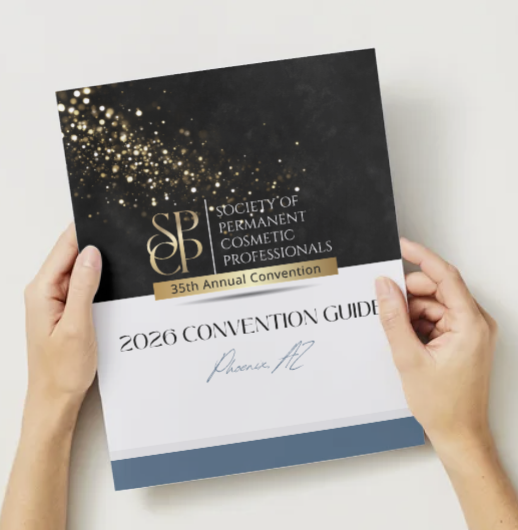
If you're attending Convention, the Official 2026 SPCP Convention Guide should be your first stop when preparing for Phoenix.
The guide includes the full agenda, workshops, presenter information, what to bring, venue details, events and other important attendee information.
It is a live Canva document, and we will continue updating it as new information becomes available right up until Convention. Attendees can bookmark the guide and check back regularly or print a copy closer to the event.
Introducing the CSMP Certification
Certified Scalp Micropigmentation Professional
The SPCP has officially introduced its newest professional certification — CSMP, Certified Scalp Micropigmentation Professional.
As scalp micropigmentation continues to develop as its own specialty, the CSMP provides practitioners with an opportunity to demonstrate that their education and industry knowledge meet an established professional standard.
Eligibility includes 100 total qualifying education hours, including SMP-specific education, current industry-specific Bloodborne Pathogens training and additional application requirements.
Like the CPCP and CPTP, the CSMP is an examination-based professional credential. It is not simply awarded upon completion of a training course.
The First CSMP Exam
The very first CSMP examination will be offered in person at the 2026 SPCP Convention in Phoenix.
This will be the first opportunity for qualified practitioners to sit for the examination and earn the new designation. The CSMP exam is expected to become available online in 2027.
For those working professionally in scalp micropigmentation, this is an important new development in the recognition of education, knowledge and professional standards within this growing area of our industry.
Take Your Certification Exam at Convention
On Monday, September 21, qualified applicants will have the opportunity to sit for an SPCP certification examination live at Convention.
All three SPCP examinations will be available:
CPCP – Certified Permanent Cosmetic Professional
CPTP – Certified Paramedical Tattoo Professional
CSMP – Certified Scalp Micropigmentation Professional
The special in-person examination application fee is $250, reduced from the regular $300 fee.
Applicants may sit for one exam only and must apply in advance, meet the eligibility requirements and receive approval before Convention.
VIEW INFORMATION & APPLICATION ON SPCP WEBSITE

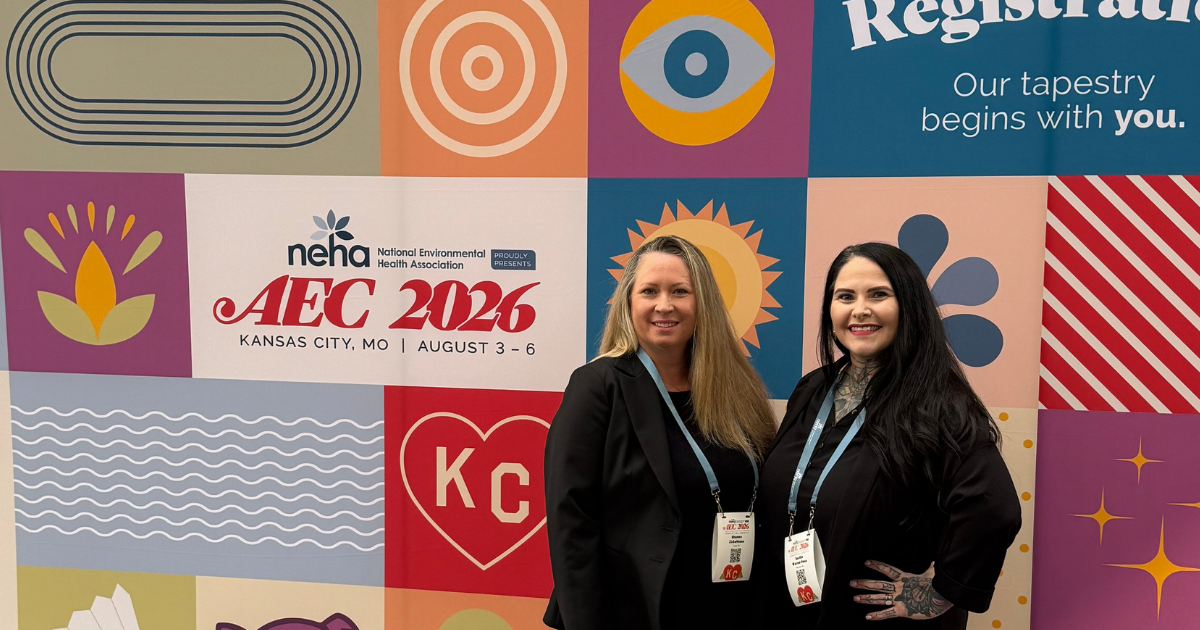
SPCP Representing at NEHA
The SPCP was proud to be represented at the National Environmental Health Association (NEHA) conference, providing an important opportunity to connect with environmental health professionals, regulators and others involved in public health and body art oversight.
Having SPCP represented in these conversations helps ensure that the permanent makeup profession has a voice as regulations, health and safety practices, and industry standards continue to develop.
Building stronger relationships between artists, professional organizations and regulators is an important part of moving our industry forward. These connections allow us to share the realities of professional permanent makeup practice while also gaining a better understanding of the public health considerations that influence regulation.
SPCP will continue working to strengthen communication with regulators and support informed, practical standards that promote both public safety and professional practice.
Industry News
What New Research Tells Us About PMU & Tattoo Ink Safety
A newly published 2026 scientific study has brought further attention to an important topic for our industry: microbial contamination in tattoo and permanent makeup inks.
Published in Scientific Reports in August, the research examined microbial contamination associated with inks used for tattooing and permanent makeup.
For practitioners, research in this area is an important reminder that infection prevention extends beyond sterile needles, barriers and correct workstation setup. Product manufacturing, storage, handling and dispensing are all part of the infection-control chain.
What Does This Mean for Artists?
Good pigment practices should include:
Purchasing pigments from reputable manufacturers and suppliers
Checking expiration dates and lot numbers
Following manufacturer storage instructions
Dispensing pigment in a way that prevents cross-contamination
Never returning dispensed pigment to its original container
Monitoring product safety notices and recalls
Maintaining appropriate hand hygiene, barriers and infection-control procedures
As permanent cosmetics continue to evolve, staying informed about research involving the products we implant is an important part of professional practice.
Professional standards are about more than technique. Product knowledge, infection prevention and safe working practices are fundamental to protecting both practitioners and clients.
Member Education
Know Your State Regulations
Our August online education session focused on a subject every permanent makeup professional should understand: state regulations.
Regulations can vary considerably from one state to another, including requirements relating to licensing, facilities, Bloodborne Pathogens training, education and permitted procedures.
Our August session brought together professionals familiar with regulations in several states to help members better understand how requirements can differ depending on where they practice.
This is particularly important for artists who relocate, travel to perform services, teach in different states or operate across multiple jurisdictions.
SPCP members can access available educational resources and member education through the SPCP Members Portal.

Don't Forget Your Member Education
SPCP members have access to additional educational resources and courses through the Members Portal.
We encourage members to regularly log in and explore the education currently available to them. New resources and opportunities will continue to be added as we expand our member education program.
Your SPCP membership is more than a listing or designation — make sure you are taking advantage of the educational resources available to you.
Update from Gallagher: Affordable Health Coverage Solutions for Association Members
Medicare Enrollment, Key Dates, & Ways to Avoid Penalties
Medicare is a federal health insurance program for Americans aged 65 and older, as well as younger individuals with specific disabilities or permanent kidney failure. It is divided into four parts: Part A (hospital insurance), Part B (medical insurance), Part D (prescription drugs), and Part C (private Medicare Advantage plans).
When you elect to enroll and what types of Medicare coverage you opt to take can impact you more than you may know.
While the federally recognized retirement age is now 67, Medicare begins for most people when they turn 65 and you may begin to see letters in the mail before this milestone birthday regarding your coverage options. It is important not to ignore those messages as this could cost you your Medicare premiums for the rest of your life.
Unless you are already drawing early Social Security benefits, assuming your Medicare coverage will automatically begin at 65 is a costly mistake. You have a 7-month window to enroll without penalties: the month of your 65th birthday, 3 months before your birthday month, and 3 months after your birthday month.
3 Penalties to Look Out For
Part B – You can receive a 10% penalty for every year that you do not enroll.
Part D (Prescription Drugs) – For every month you have without coverage, you will receive a 1% penalty
* Part A – if you do not qualify for a premium-free Part A, the penalty is 10% for twice the number of years you don’t sign up. For example, if you’re 2 years late, you’ll have the penalty of 4 years.
The Exception – Special Enrollment Period
If you’re still working at 65 and have employer health insurance, you could quality for a Special Enrollment Period (SEP) if you choose to move to a full Medicare plan. Employer insurance is one of the most widely accepted exemptions available. If you have prescription drug coverage, this can also make you exempt from Part D penalties. If your employer has fewer than 20 employees, Medicare may become the primary payer when you are eligible for Medicare. It is important to verify how your employer coverage coordinates with Medicare before delaying enrollment.
In most cases, individuals have an 8-month Special Enrollment Period to enroll in Medicare Part B after active employment or employer coverage ends without incurring a late enrollment penalty.
3 Steps to Take Before You Turn 65
1. Mark out your 7-month window so you know when to enroll.
2. Check if your current insurance meets the special enrollment period qualifications.
3. Don’t wait until you retire, contact Social Security or Medicare directly to confirm
Missing certain Medicare enrollment deadlines may result in long-term or permanent premium penalties, depending on the coverage involved. Luckily, this is completely avoidable. Make sure you know your enrollment dates and any qualifying exemptions. If you’re aware of your timeline, you should be just fine.
Please know that if you are working past 65 you may find that taking full Medicare may offer better coverage options at a lower cost than an employer sponsored group plan which is why it is always a good idea to review your options in this situation.
Start the Conversation
Medicare Open enrollment happens from October 15th, 2026, to December 7th, 2026, with new plans taking effect on January 1st, 2027. Connect with our Gallagher Association Team by phone at 800-913-0479 or fill out a short form here https://ahs-member-us.ajg.com/spcp/ , and we'll call you back at a convenient time.
See You in Phoenix!
September is going to be a busy and exciting month for the SPCP.
We'll be welcoming members and industry professionals to Phoenix, celebrating 35 years of the SPCP, delivering three days of education and hosting the very first CSMP certification examination.
For everyone attending, keep checking the Official Convention Guide as we continue adding final information.
We look forward to seeing you in Phoenix!
September 19–21, 2026
2026 SPCP CONVENTION