February 2026 SPCP Insights

In this issue:
Member News
CPTP is now available online.
Convention Early Saver tickets are available now.
A New Members' benefit is coming soon.
This month's Sip 'n Share Replay
Brow Tips for Mature Skin
Member News
APPLY FOR CPTP NOW
The Certified Paramedical Tattoo Professional (CPTP) exam is now available online. Applications are open.
The CPTP designation is the first certification developed specifically for paramedical tattooing, including nipple/areola restoration and scar camouflage.
Created to establish clear professional standards, this credential formally recognizes practitioners who demonstrate competency, knowledge, and ethical responsibility within this specialized field.
Approved candidates can schedule their secure online exam at a time convenient to them. There is no longer a need to wait until "exam day."
For professionals seeking to distinguish their expertise in paramedical tattooing, eligibility requirements and application details are available here: https://spcp.org/paramedical-tattoo-certification
2026 SPCP Convention
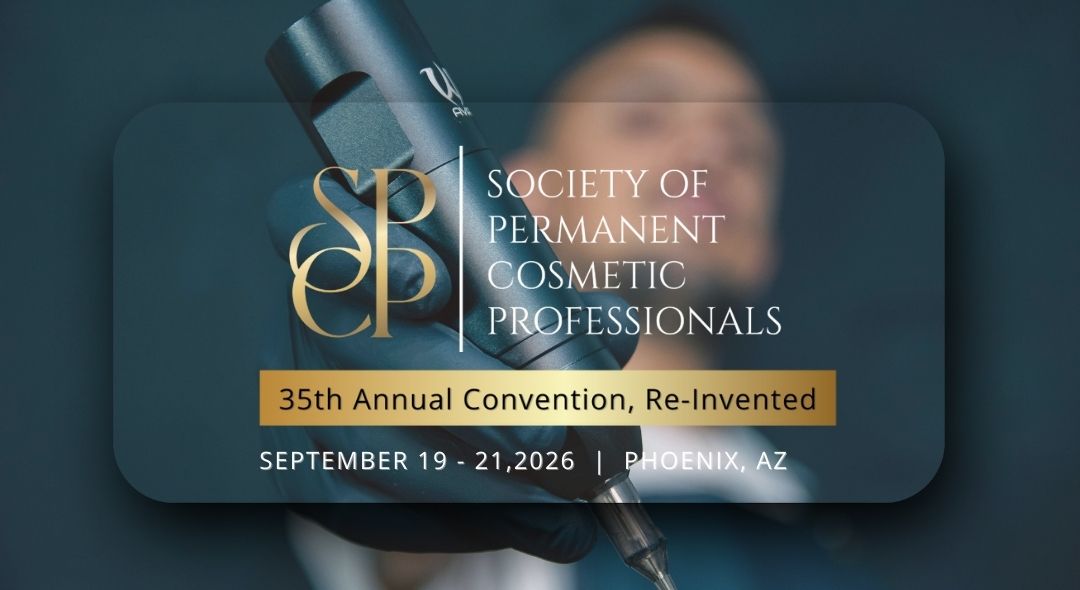
September 19 - 21 in Phoenix, AZ
Planning your continuing education for 2026? The SPCP Annual Convention will feature three full days of in-depth, workshop-style education designed for permanent makeup and paramedical tattoo professionals.
As an SPCP member, you currently have access to exclusive Early Saver pricing, but this special rate ends March 15th.
Speaker announcements and the exact convention location will be revealed very soon, but members can secure their spot now and take advantage of one of the best-value professional conferences in the PMU industry.
Register here: https://spcp.org/convention
New Benefit for Members
Coming Soon: SPCP Subject Matter Expert (SME) Program
We’re excited to be bringing back the SPCP Subject Matter Expert (SME) program — newly revamped and better than ever.
This refreshed program will reconnect SPCP members with highly experienced CPCP or CPTP professionals who have been selected by the SPCP Board of Directors for their specialized knowledge within permanent cosmetics and paramedical tattooing.
Through the SPCP Members' Portal, members will soon be able to submit questions and receive guidance from trusted experts in specific areas of the industry. In addition, SME's will contribute educational articles to our monthly newsletters and share insights that support best practices, professional standards, and continued learning.
The goal of the revamped SME program is simple: to give SPCP members direct access to credible expertise while strengthening knowledge across our professional community.
Watch for upcoming announcements as we introduce our new SPCP SMEs and share how you can take advantage of this valuable member benefit. Exciting things are coming! ✨
READ MORE ABOUT THE SPCP's SME PROGRAM

Sip 'n' Share Replay
If you missed both sessions, you can now catch up all at once.
We're excited to share that the replay for SPCP Sip 'n' Share Series | The Beauty Biz AI Play Day by Molly Klipp, CPCP is now available!

ARTICLE 1.
Brow Tip: Working on Mature Skin: A Softer, Smarter Approach
by Stephanie Wilson, CPCP
Mature skin brows may not always be what we showcase on social media, but it can be our most common client. Working on older skin requires a thoughtful shift in technique, pressure, and expectations.
Here are the key principles I follow when working on mature skin:
1. Less Is Best
Older skin does not heal the same way younger, healthy skin does. It is thinner, more fragile, and more prone to trauma. Overworking the area can easily lead to:
Excessive redness and inflammation
Heavy scabbing
Significant pigment loss during healing
When too much trauma is created in one session, the result is often disappointing retention — and sometimes more corrective work later.
Instead, I follow a “less is best” philosophy. Fewer passes. Lighter hand. Controlled implantation.
If required, I prefer to complete 2–3 lighter sessions than to overwork the skin in one appointment and lose most of the color during healing.
2. Watch Your Depth
Mature skin is naturally thinner than younger skin. That means it’s much easier to implant too deeply — which can cause:
Blurred results
Excess trauma
Poor retention
Long-term pigment migration
One of the simplest ways to control depth is by adjusting your needle choice.
For example:
If you typically use a 1RL for shading, consider switching to a 3RL with a smaller gauge. EG. #3RL 0.18
Try using a shader needle configuration, which distributes pressure more gently and reduces deep penetration.
Needle choice plays a significant role in protecting fragile skin.
3. Why I Choose Pointillism Over Whip or Pendulum Shading
We all know stretch is important when working on mature skin, but technique also matters.
Instead of whip shading or pendulum shading (which involves more continuous movement across the skin), I prefer traditional pointillism.
Pointillism allows for:
Precise, controlled implantation
Minimal dragging of the needle across the surface
Reduced friction and trauma
Better healing outcomes
Because the needle is not repeatedly sweeping across the skin, there is less cumulative damage. This controlled, stippling approach helps me preserve skin integrity while still building soft, beautiful color.
The Benefit of Learning Multiple Shading Techniques
One of the most important skills for any artist — especially when working with mature skin — is versatility.
Not every technique is appropriate for every client. Having only one shading method limits your ability to adapt safely.
When you learn and master multiple shading techniques:
You can choose the gentlest approach for fragile skin.
You can adjust based on elasticity and density.
You avoid forcing one method onto every client.
You become a more confident, well-rounded artist.
To Summarize
Mature skin deserves patience, skill, and intention.
Reduce your passes and don't overwork the skin.
Control your depth.
Choose your needle wisely.
Adapt your technique.
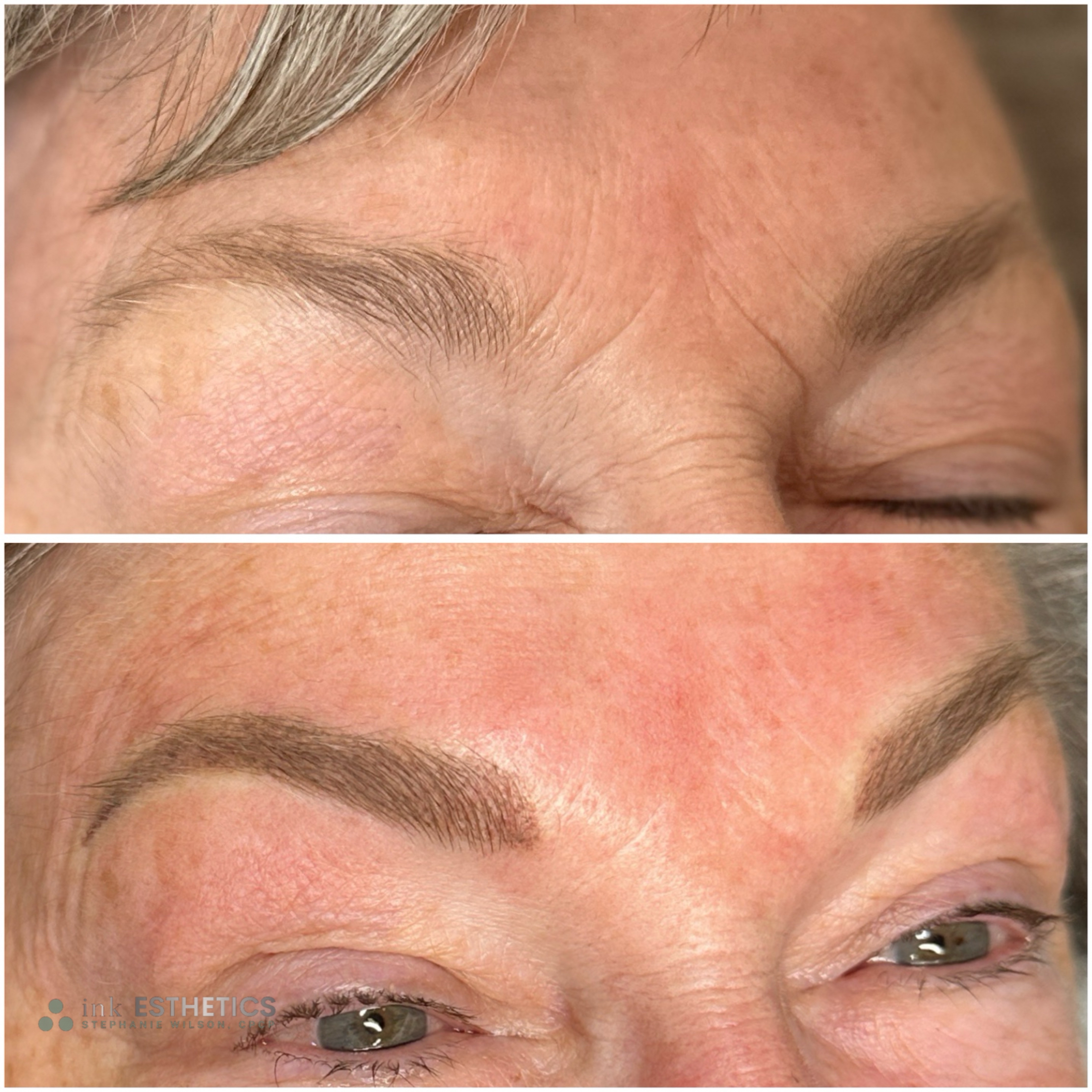
Photo Submitted By:
Stephanie Wilson, CPCP - @inkesthetics